
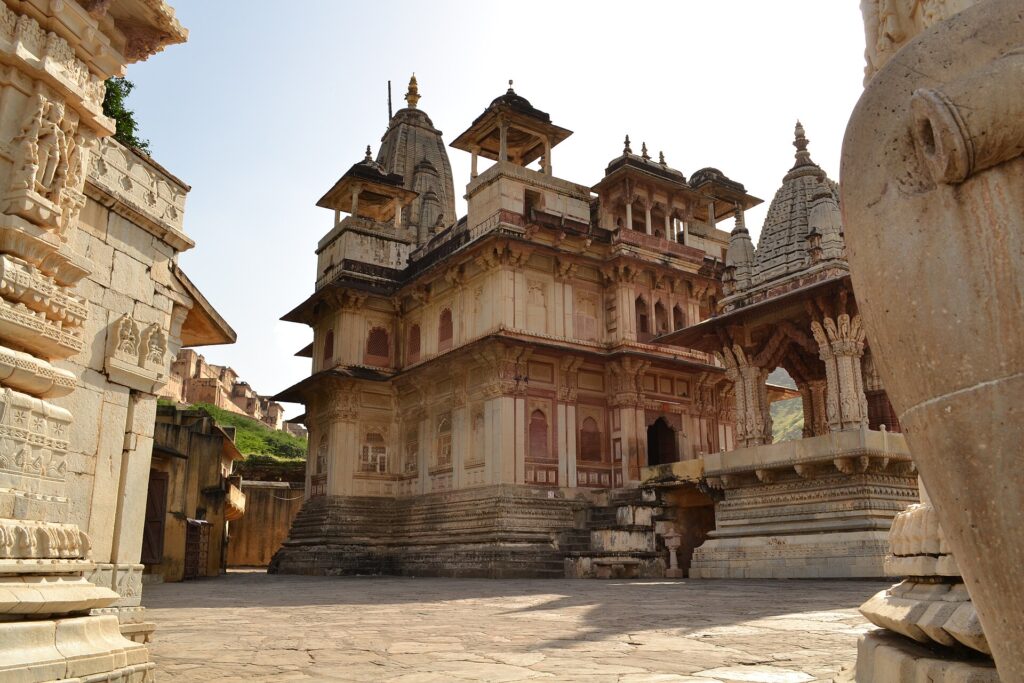
Tucked away at the foot of the magnificent Amer Fort near Jaipur, the Jagat Shiromani Temple (often called Meera Bai Temple) is one of the finest architectural marvels of 17th-century Rajasthan. While most visitors flock to the grand ramparts of Amer Fort above, this temple offers a quieter experience rich in maternal devotion, spiritual history, and stone carving craftsmanship.
Historical Beginnings: Built out of a Mother’s Grief
The temple was commissioned between 1599 and 1608 AD by Queen Kanakwati, wife of King Man Singh I of the Kachwaha dynasty. It was built in loving memory of their son, Prince Jagat Singh, who passed away at a young age.
Queen Kanakwati named the shrine Jagat Shiromani, which translates to the “Head Jewel of the World” or “Jewel on the head of Lord Vishnu”.
A Unique Devotional Enshrines: Jagat Shiromani is believed to be the only temple in the world where saint-poet Meera Bai is worshipped directly alongside Lord Krishna in the inner sanctum.
The Idol of Meera Bai’s Krishna
According to local history and religious tradition, the black stone idol of Lord Krishna housed in the temple’s garbhagriha (sanctum sanctorum) is the exact idol that Meera Bai worshipped in Mewar nearly 600 years ago.
During times of regional conflict with Mughal armies, the rulers of Amer rescued the revered idol from Mewar to prevent its destruction and brought it safely to Amer, where it was later installed in this grand temple alongside a statue of Meera Bai herself.
Architectural Highlights
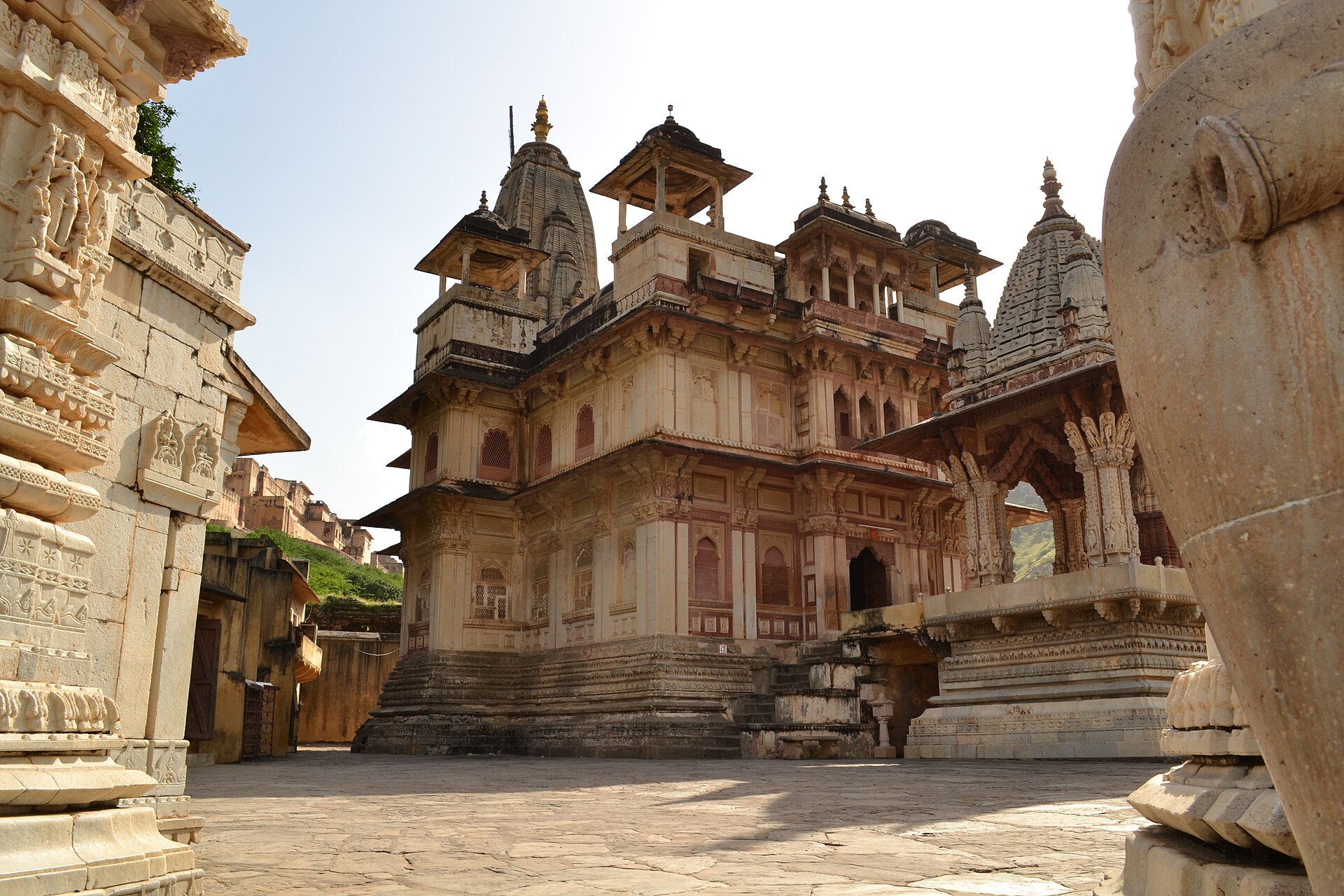
The temple built over a high raised plinth (Adhisthana) blends traditional Nagara style Hindu architecture with subtle Rajput and Mughal structural elements:
- Single-Piece Marble Toran: The grand entrance features an ornate archway (toran) carved from a single slab of white marble, flanked by sculptures of trumpeting elephants.
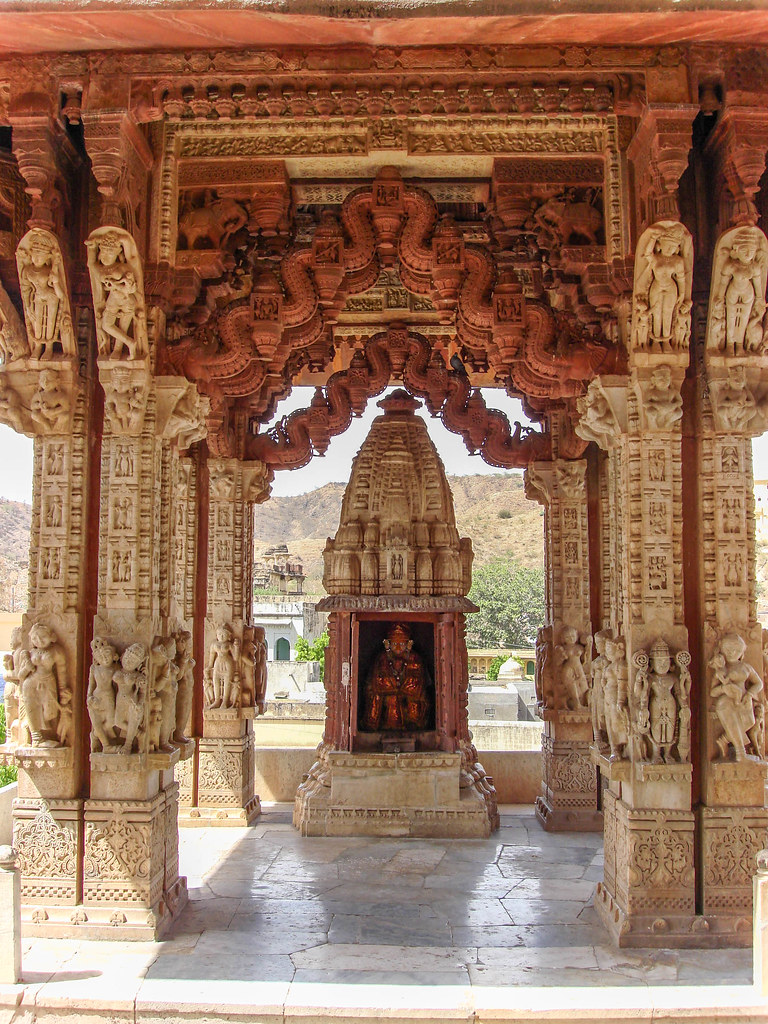
- Garuda Mandapa: Sitting directly opposite the main shrine is a standalone white marble pavilion dedicated to Garuda, the mythical bird vehicle of Lord Vishnu.
- Intricate Bas-Relief Carvings: The sandstone pillars, walls, and multi-tiered shikhara (spire) feature carvings depicting mythological legends, musicians, horses, and scenes from the Puranas.
- Ceiling Murals: The assembly hall (mandapa) features painted ceiling panels preserving 17th-century Amber artistic traditions.